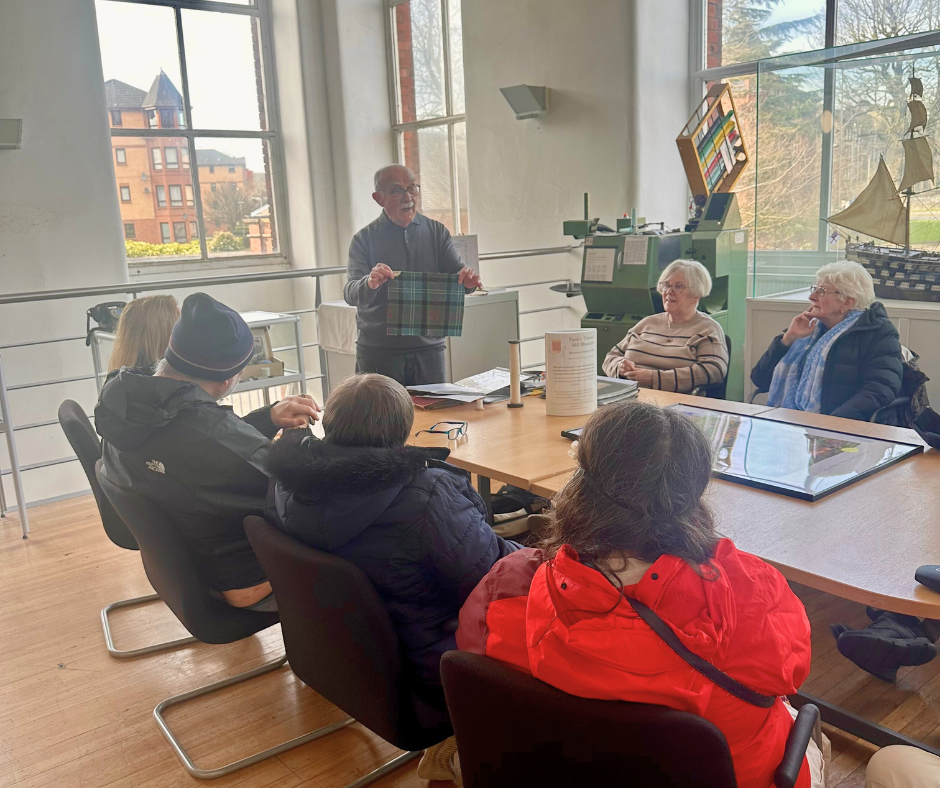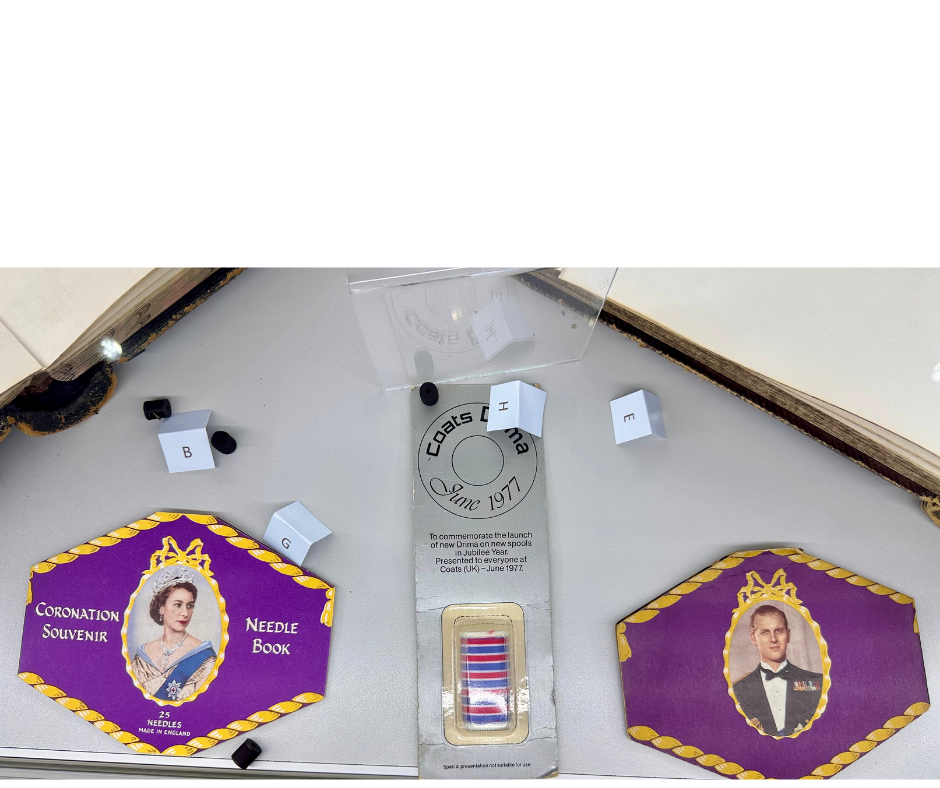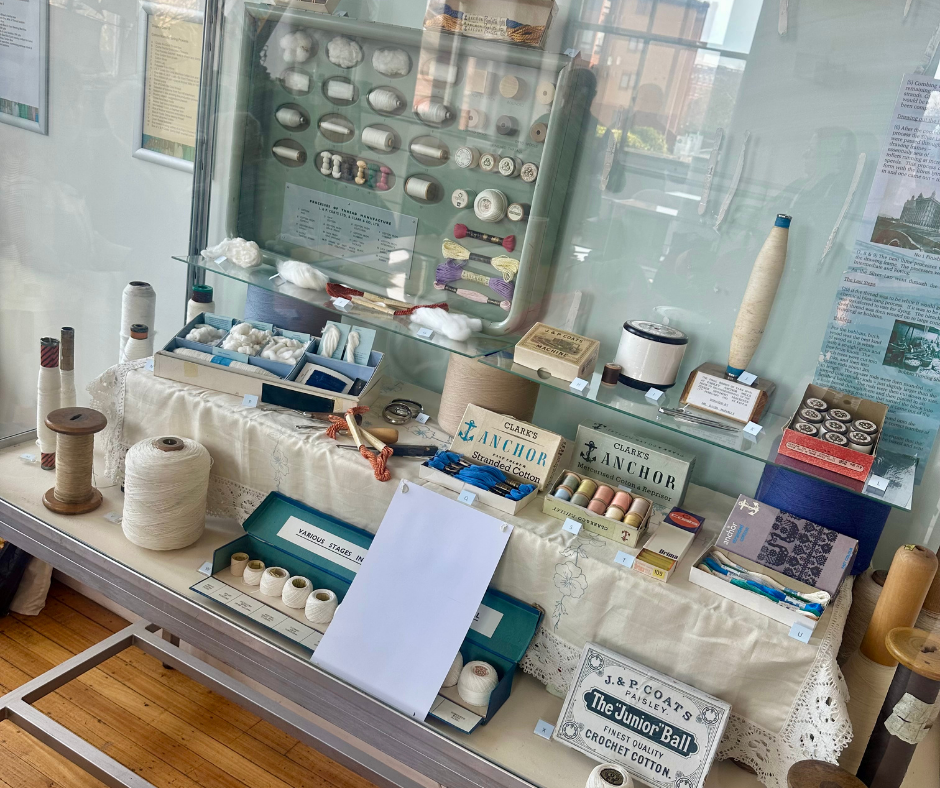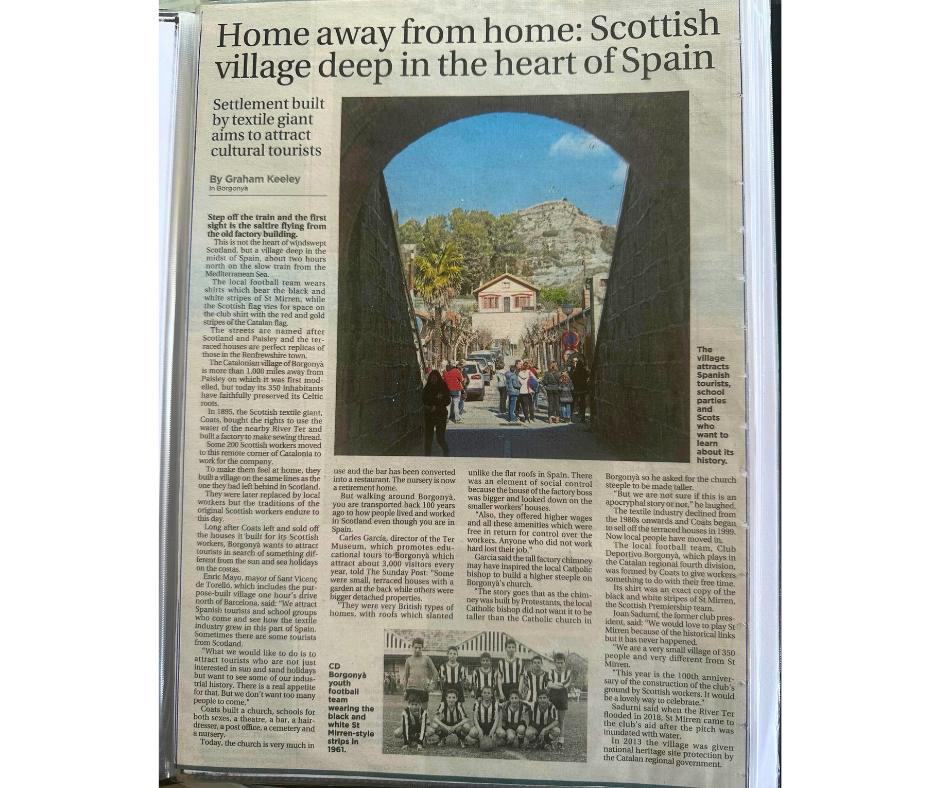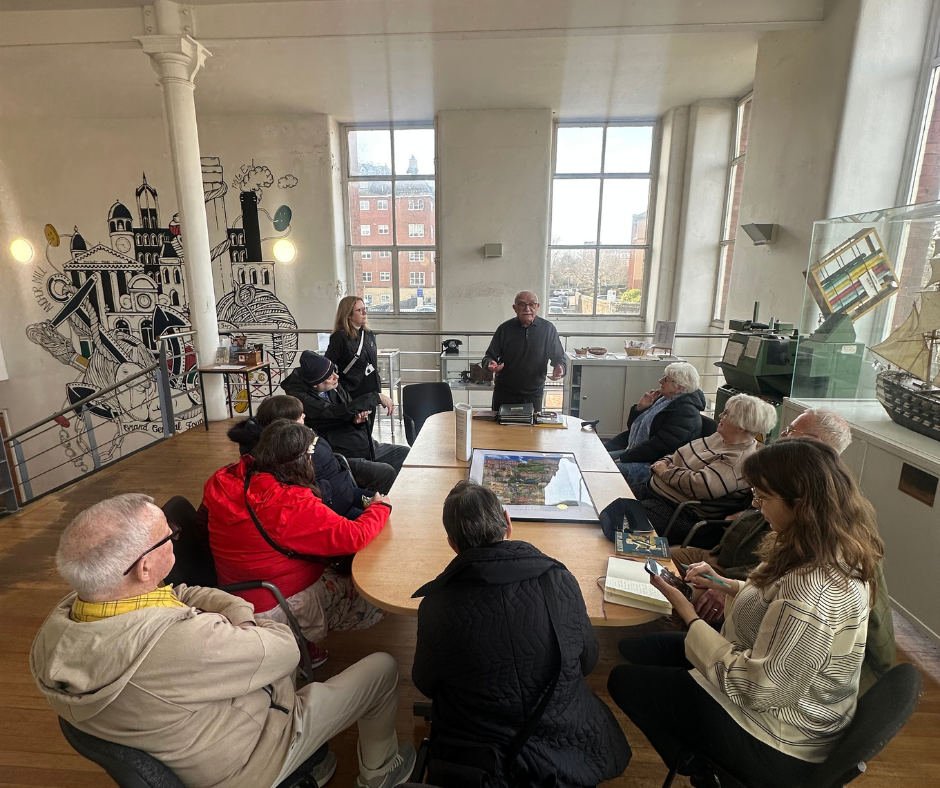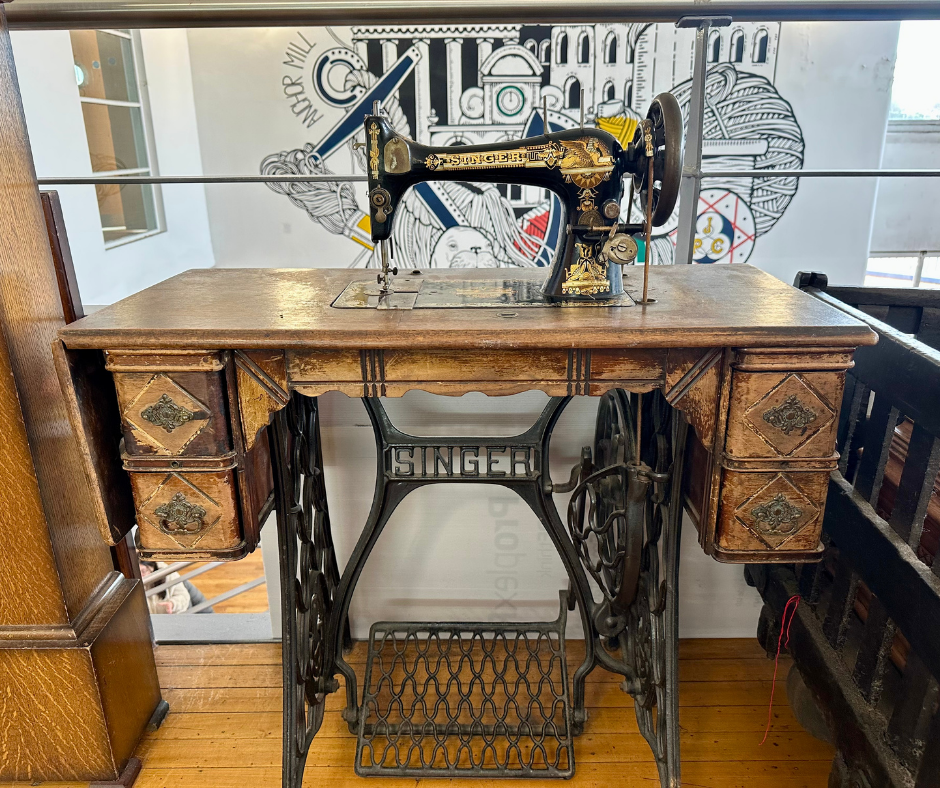
Our group enjoyed a fascinating guided tour of the Paisley Thread Museum at the Abbey Mill Business Centre, where Clarke, our host, brought the town’s remarkable textile heritage vividly to life. He explained how Paisley grew from small-scale weaving in the early 18th century into a global powerhouse of thread manufacturing, thanks in part to pioneers like Christian Shaw—whose early spinning innovations laid the foundation for an industry that would eventually employ thousands and dominate world markets.
We learned about Jane Haining, the mill worker who became a WW2 heroine. Before dedicating her life to protecting Jewish children in Budapest, Haining worked as a secretary at J. & P. Coats’ Ferguslie Mill—then one of the world’s largest thread manufacturers—before her bravery ultimately led to her arrest and death at Auschwitz in 1944. Her story remains one of the most inspiring chapters in Paisley’s history.
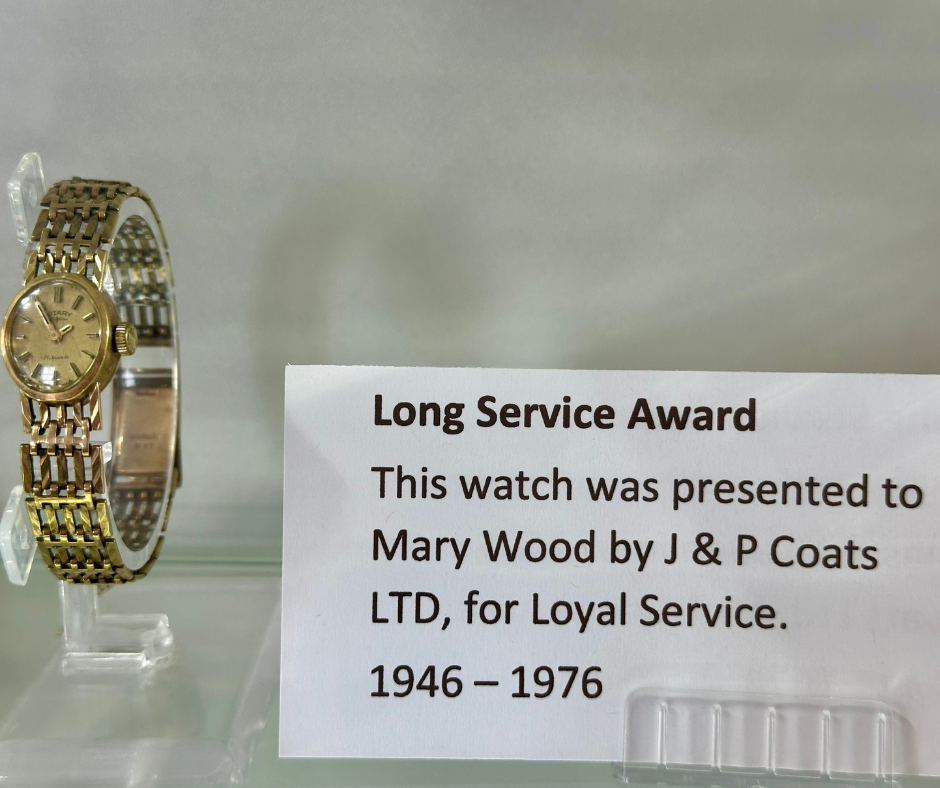
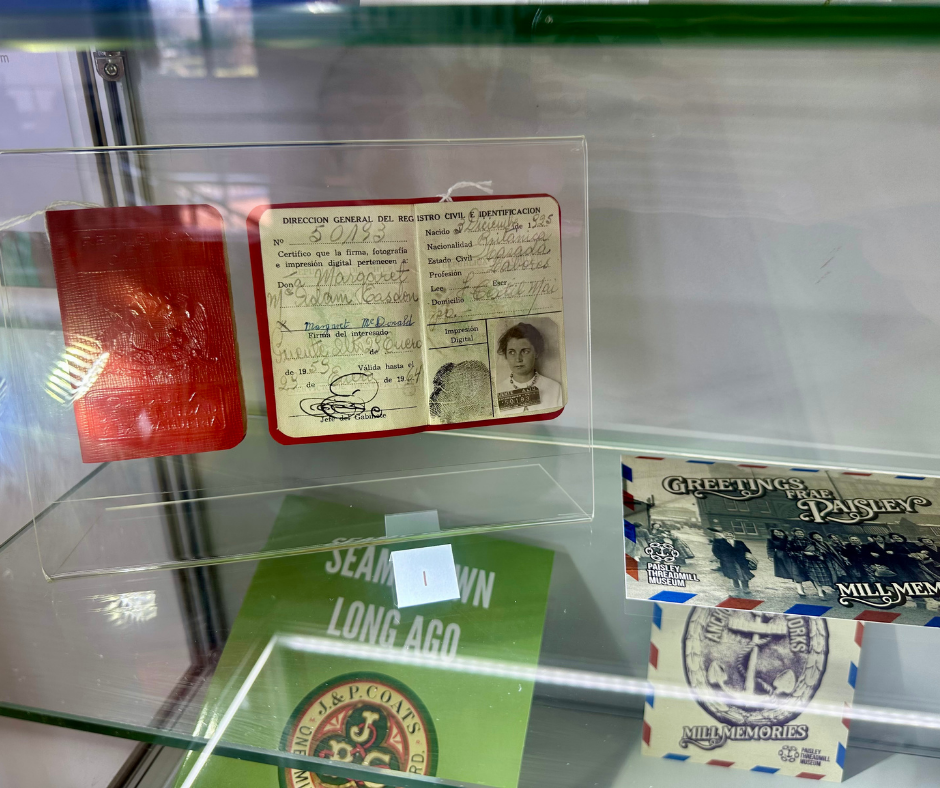
Clarke also shared stories of Paisley’s skilled mill workforce, including the generations of mill lassies whose craftsmanship helped popularise the famous Paisley patterns and textiles that were exported around the world. Their work powered massive industrial growth during the 19th century, when Paisley became the global centre of thread production, home to enormous complexes such as the Anchor and Ferguslie Mills.
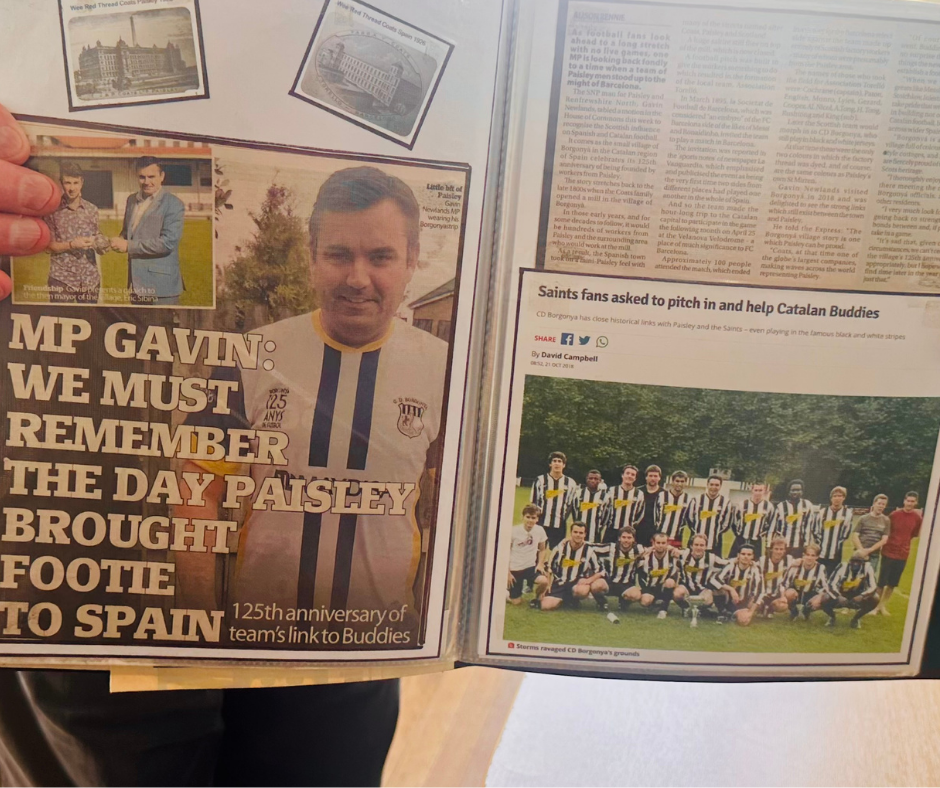
We even heard about the surprising cultural connections Paisley inspired abroad—such as the Italian town of Barga, often described as the “most Scottish town in Italy,” where historic links to Scotland remain strong to this day.
Finally, Clarke talked us through the extraordinary legacy of the Coats and Clark families, whose global thread empire became one of the biggest industrial concerns of the 19th century. Their philanthropy funded many of Paisley’s most iconic buildings, including the Town Hall, Museum & Art Gallery, and the Coats Observatory—gifts that shaped the cultural and architectural identity of the town for generations.